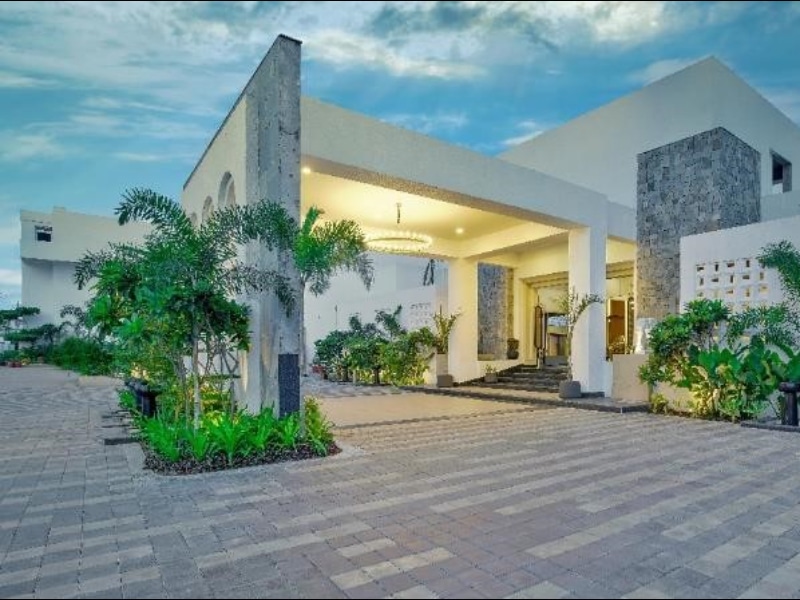
The hospitality industry seems to be constantly evolving. Looking back now, one can say that the hotelier industry seems to be more rapidly evolving and upgrading with current trends and technology than any other. And one such aspect that has seen a dynamic transformation is hotel lighting. Moving along with times and trends in the market, hotel lighting not only addresses the décor and ambience but also manages well-being and energy savings.

Anil Badan, Principal Architect, Studio B Architects, says, “Hotel design is all about the guest experience. Lighting in hotels establishes a pleasant ambience and defines the guests’ mood and experience. In the hospitality sector, especially, luxurious experiences are viewed as simple interventions done exceptionally well. The relaxing and comfortable feeling does not come from the furniture, decor, or design alone but an amalgamation of all with the overhung effect of proper lighting. For example, a well-designed chandelier creates more impact than a dozen light fixtures used throughout the space.”

Setting the mood
The interior landscape of a hotel is all about the visual and experience. The mood of a visitor, as soon as he steps into the hotel, is influenced by two factors – the service and the ambience. And lighting plays a big role in the later. “The entire hospitality industry works around alluring the masses. The factor of lighting in hospitality plays a significant role in deriving the mood and ambience of a space and therefore needs to be treated with utmost care. It can greatly influence and stimulate the human senses, emotionally and physically. As designers, it becomes crucial to design cleverly around lighting to create a positive stimulus for the end-users,” says Khozema Chitalwala, Founder and Principal Architect of Designers Group.

Continuing on the same line, Jiri Krisica, Head of Design, Sans Souci, says “The objective of the hotels is to attract customers. So good lighting is the key to making them feel good and surrounded by a pleasant environment. Lighting plays an important role here as it creates the right kind of ambience and mood in the room, lobby, ballroom, or restaurant. It can act as a centrepiece of the interior, or just compliment the overall experience.”

Each hotel portrays certain values and styles which reflect in its interior design. Lighting plays an important role in highlighting those points. The positive experience for customers depends on the visual dynamics that a hotel plays.

Working with shadows and darkness helps create a creative experience in a space. The basic ideology is to illuminate the various parts of a hotel and then analyse its ideal lighting. Badan says, “Lighting in hotels has surpassed the need for functionality and the latest trends demand experiential lighting. With the impact of social media, users need to take picture-perfect photographs of food, the location, and themselves. Every space now is a blend of classic and trending styles. However dimmable lights, LEDs, and smart lights could not slow down the demand for evergreen classic lighting, such as decorative chandeliers building a neo-classical space. Also, there is an increasing trend of minimalistic contemporary lighting fixtures, such as pendant lights and hidden cove lights, which translates elegance and sophistication and gives a soothing experience to the users. These lights are also flexible to hang on any part of the ceiling and create a new aesthetic for any hotel space.

Illumination of the entrance
The first impression of a hotel is often set through its lobby. It throws in a clear message to the user if the stay is going to be worthy or not. Therefore providing essential design lighting over here is the key. One can choose to highlight the reception desk with warm light or a bold dominant light. A subtle play of warm tones and contrasts will help to ace the warmness of that space.

Lighting generally guides the users to recognize their spaces and helps them transit from one functional space to the other. Softer lights are generally used where the guests are sitting in the waiting lobby. Striking a balance between horizontal and vertical lighting shall be taken care of so that the waiting lobby does not look too bright or off-balance. Hence, Materials shall be used to soften the whole atmosphere and shall focus more on the main reception area instead of the waiting rooms. Rakesh Sethi, GM, Shangri-La Bengaluru, says, “As one steps into Shangri-La Bengaluru, guests are greeted at the lobby with floor-to-ceiling windows and a grand chandelier evoking a sense of luxury.”
Sustainability factors
With sustainability in mind, the consumption of electricity comes into mind. Hence, modern hotel designs come with daylight sensors, which analyse external light and adjust the internal one accordingly. Room occupancy sensors also detect whether or not light is required for that particular room.

Aravind M, Chief Engineer at The Leela Bhartiya City Bengaluru, says, “The current lighting trends at The Leela Bhartiya City Bengaluru, the technologies that have been adopted by our hotel ensure that all light fixtures in the hotel are LED-based. The lighting in the hotel is integrated with a dimming system that controls the strength of its brightness. Our key card systems help reduce further energy consumption by turning off lights when the room is not in use. The hotel also has additional features like a dimming control that dims lights when not in continuous use, thereby reducing electricity consumption significantly. The lighting system here includes time-based operations that automatically switch off lights in areas that have no activity for continuous hours that help save electrical energy by a substantially large amount.”
He adds, “Greener solutions that are becoming popular are motion sensor lighting, one of the latest and most energy-efficient green lighting solutions. Nowadays, LED lights made of non-toxic materials are being installed in modern hotels to a great extent.”
Monitoring tools that keep track of all the electrical appliances of a hotel and using renewable energy also help in analysing the overall and balancing consumption of a hotel. Sethi says, “We are committed to creating environmentally responsible and resource-efficient facilities as part of our group’s green policies. Thus, the renewable solar power plant supplies 90% of the hotel’s electricity consumption. Due to our continuous effort, we have been awarded the ‘Leadership in Energy and Environmental Design which is a rating system devised by the United States Green Building Council (USGBC) to evaluate the environmental performance of a building and encourage market transformation toward sustainable design.”

He adds, “Shangri-La Bengaluru has installed Variable Frequency Drives which control the AC motor speed and Building Management System (BMS), a computer-based control system that controls and monitors the entire lighting solution in the hotel. Furthermore, colleagues are encouraged to go through courses such as ‘Engineering Sustainability and Cost Management’, which shows how one can contribute to the idea of sustainability and take positive and cost-reducing steps.”

Low-watt LED blubs and efficient light fixtures combined with natural woods or raw steel offer hoteliers a wide range of options for making rooms eye-catching and soothing. Chitalwala says, “We have seen innovation in the approaches taken to use LEDs for clean illumination as they don’t require maintenance or replacements. Apart from them, smart lighting with the use of apps and wifi-controlled fixtures is up and coming, which greatly reduces energy consumption. Dimmer controls and colour changers are hugely used in different spaces of hospitality projects such as pools, decks, outdoor spaces, etc., for creating the perfect ambience for an enhanced guest experience.”
Energy savings greatly lends to a hotel’s reputation along with accounting for its efficiency. Thus, hotels are finding it feasible to invest in technologies that will last longer and reduce unnecessary consumption.