In our current age of technological advancement and innovations, the construction and development sector has enormous potential for substantially reducing greenhouse gas emissions, even more than other significant emission sectors.
Green buildings and sustainable architecture bring benefits beyond economics and the environment. Sustainable buildings provide some of the most effective means to achieving a broad spectrum of sustainability development and global goals.
From actively combating climate change, and creating tenable and thriving communities to driving economic recovery and growth, the benefits of green buildings are aplenty and far reaching. Green buildings are a powerful tool that curtails negative impacts on the environment by optimising the consumption of water, energy or natural resources.
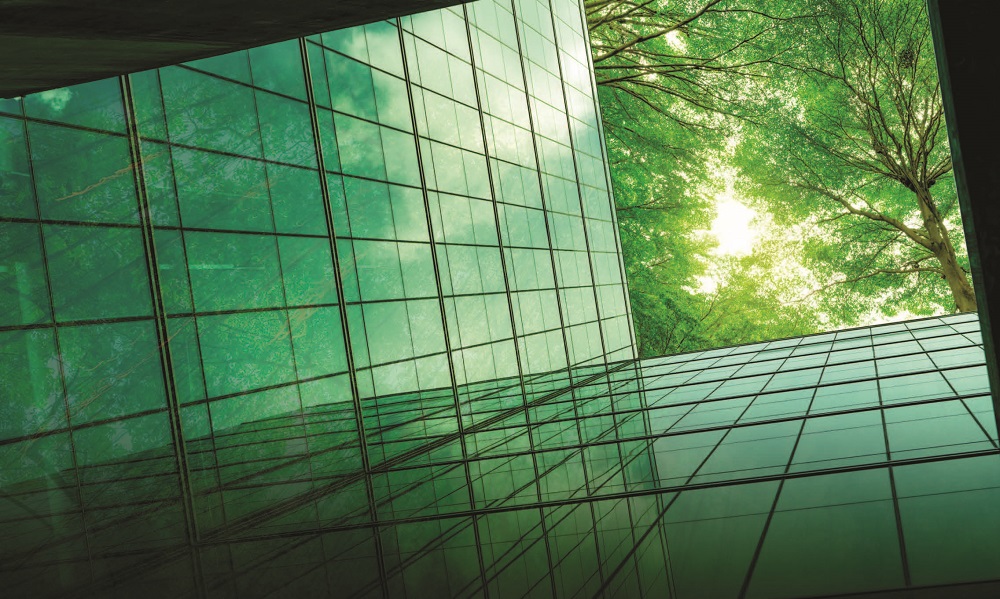
They also positively impact the environment on a local and city level as they can generate their own power working towards a net-zero goal and even increase biodiversity. There is substantial evidence that demonstrates the positive impacts of greenery and biodiversity on human well-being and the health of the urban space.
As the percentage of the population living in urban areas increases across the globe, it is critical to understand that biodiversity contributes significantly to the liveability of our ever-expanding urban spaces.
Biophilic design supported by ecosystem services like improved air quality and HVAC systems brings incredible benefits to humans like reduced morbidity, improved physical health, better mental well-being, increased social cohesion, lower stress levels, more clarity of thought, and even progress in healing.
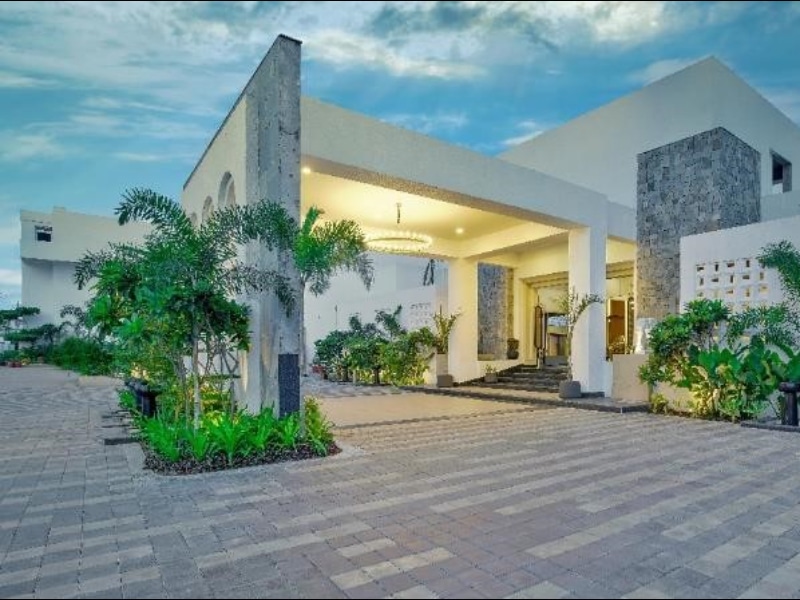
We have reached a point where it has become vital and non-negotiable for infrastructure and hotel developments to prioritise environment-friendly architecture and design. Integrating sustainable practices, adopting environment-friendly solutions, using efficient materials, harnessing technology to optimise utilisation, and shifting to renewable energy across the built environment and the entirety of our cities is the only way forward for hotel developers.
Here are a few key trends that we can incorporate in our existing and future developments wherever feasible. These technologies are worth following and adopting to elevate the well-being of real estate developments and their inhabitants and users while building a viable future.

Indoor Air Quality Improvement
Indoor air pollution is one of the most harmful environmental risks to people’s health. Studies show that Indoor Air Quality (IAQ) has a considerable impact on people’s comfort, health, and performance.
IAQ is a growing concern for hotels and hotel managers, and guests as it impacts occupant well-being, respiratory and mental health, and overall productivity. This issue has become even more critical in the past couple of years since people have started spending more time indoors.
Hotel need to focus on embedding IAQ management solutions in buildings, be it offices or residential developments because higher levels of carbon dioxide indoors and prolonged exposure to it can be detrimental to health.
Water conservation and monitoring technology
As per the US National Academies of Science, an individual requires an average of approximately 3.7 l of fluid intake per day. As the global population continues to increase, we need to optimise the use of water in our developments, as well.
Every development has the potential to recycle its own water, and it is imperative that they start doing that at the earliest. Implementing circular water management solutions can substantially reduce water wastage and optimise water usage and reuse.
Decentralised water recycling is quite feasible, and its benefits are aplenty. Every new development needs to be equipped with these affordable and efficient decentralised water recycling systems.
There are various intelligent and innovative water recycling products that help reduce wastage at the source. These products work purely on an OpEx model, thereby reducing huge investment costs. Water recycling is an incredibly efficient and affordable way to conserve water.
These systems collect, treat, and reuse the water used during showers, dishwashing, washing machine usage, and even air conditioning units.
Air to water technology: Generating drinking water from humidity
Atmospheric Water Generator Technology (AWG) machines are a great way to ensure drinking water reaches more people. This incredible technology can generate pure and fresh drinking water out of the air. There is a lot of water vapor in the atmosphere, especially during the hot and humid months that major part of the country sees.
Atmospheric water generation empowers hotels to harvest this water vapor to make clean drinking water available.
Water produced by AWGs is pure and does not contain any contaminates whatsoever – it makes for an excellent tool for sustainably providing potable water while also saving money. Generating water through innovative utilisation of the most abundant form and source of water available is a highly sustainable practice that can help keep our cities from reaching their zero-day.
Setting up these systems in areas to make water accessible everywhere would reduce plastic use and also provide water to areas where there is none.
Radiant cooling technology
New-age use of emerging technologies is making significant breakthroughs in sustainable cooling solutions for greenhouses. For example, systems are available that can provide year-round cooling in greenhouses without any interruption or outage during peak summer season. One such solution we use is a capillary tube cooling system that works smartly to condense the humidity and produce distilled water in return during the cooling process, which is then used for watering gardens and plants. This makes for an ideal environment for sensitive plants to thrive, within an ecologically sustainable environment.
Energy-efficient paints
Did you know there are wall paints and façade paints now available that deliver an energy-saving effect? Tiny hollow ceramic bodies used in these paints help create a “thermo-ceramic membrane” with which users can sustainably save energy.
The advantages of this coating include reflection, directed evaporation and anti-electrostatics. Additionally, the extraordinary material durability of these paints, which makes the coatings strong, are adaptable and highly durable.
These water-based and solvent-free paints are an excellent way for hotel developers to protect the environment and ensure that their surfaces are protected from the harsh effects of moisture, dust, UV radiation, air pollution, and fungi.

Sustainable and Optimised Garbage Management
The amount of garbage that comes from hotels daily is enormous – and it’s a massive problem if it’s not managed properly (which it is not in most cases).
Hotels can use eco-friendly automated machines designed especially for handling food and household waste effectively. Solutions are being developed that can convert all kinds of food waste and turn around 80 – 90% of it into organic compost that can then be used to nurture plants (to reduce the usage and emissions from chemical fertilisers).
Contrary to popular belief, this process is entirely free of odour and leaves no residue or dripping liquids behind. Embedding these technologies help hotels reduce their carbon footprint to build a long-term and sustainable living environment for generations to come.
Energy-efficient glass
Energy efficiency glass is another great new solution that hospitality architects and designers should take note of to help houses use energy more efficiently by delivering the same level of comfort to inhabitants while consuming lesser energy. Improving the thermal performance of a window or a glass door provides an excellent and long-lasting final energy savings solution.
Almost a fourth of all domestic heat loss happens through windows and other openings. Installing energy-efficient glass also helps hoteliers to save money on heating bills compared to standard double-glazed frames.
Energy-saving glass solutions are a significant upgrade as they use an advanced metallic coating that reflects the heat from radiators and fires right back into the room instead of letting it escape through the windows.
Moreover, it also allows free heat and light energy from the sun to pass through and warm up homes to improve energy efficiency further. When people are spending most of their time indoors, it is essential to create comfortable places that are sustainable and affordable.
Smart duct sealing
Leaky ductwork is one of the most unnoticed yet significant contributors to energy waste in buildings across the globe, today. Hotels can tackle this expensive problem with a relatively inexpensive solution – by sealing the air ductwork to reduce a building’s energy consumption. Duct sealing is, in fact, one of the most effective strategies for managing energy and costs.
Over half of any building’s HVAC energy goes to its fans, and studies show that reducing leaks by just 15% can actually drop fan requirements by around 40%. Imagine how much money and energy can be saved every month with that.
Duct sealing is a comprehensive and cost-effective solution that reduces energy waste by doing away with the cracks, holes, and other leaks in ductwork that allow unconditioned and adulterated air to enter the building. In addition, they provide considerable savings in energy costs by increasing the efficiency of the same HVAC fans and combating excess ventilation loads.
Using Sustainable Building Blocks
Sustainable building blocks use Insulated Concrete Form (ICF), which is a construction system wherein lightweight blocks made of Expanded Polystyrene Sheet (EPS) can be ‘stacked’ together (just like Lego) to build the desired walls and shapes.
After this, these hollow blocks are filled with concrete – the EPS layers act as the insulation that makes the ICF blocks stay in place to combine several cumbersome steps of the construction process.
ICF construction can be a game-changer for hotel developers because it can substantially reduce the energy requirements as it provides dual insulation and minimises the heat exchange between the building’s interior and exterior.
Moreover, both these blocks are inert and do not rot or decay, which means they make stronger buildings that last longer. ICF forms, in fact, can build a concrete wall with about twice as much comprehensive strength as that of conventionally poured walls.
This makes the whole construction process more cost-effective, energy-efficient, and low maintenance. The hotel construction and real estate industry has the potential to turn around the future of any city by integrating environment-friendly buildings and spaces.
The pandemic has highlighted the ugly truth that our unsustainable habits may render the biggest metro cities inhabitable for our future generations.
Greener construction and sustainable real estate development practices can be the drivers of change for cultivating environment-friendly habits and lifestyles.