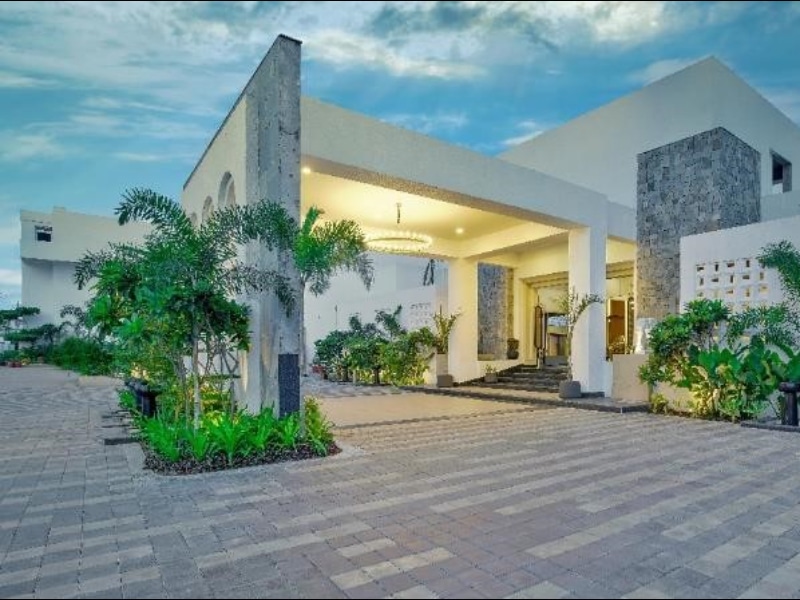

Q 1: What are some of the prominent trends in flooring design in the hospitality sector?
The pandemic was tough. And as we have emerged from the shadow of the pandemic both leisure and business travel has started increasing. However, we have all come out different post the experience. And that has changed some of the expectations from hospitality flooring.
Most importantly, we are now looking for places that look clean, feel safe and are comfortable. This is affecting the choice of both material and design. The ease of cleaning has become important. For example, an inset carpet with hard flooring around it can be tough to clean. So, increasingly single surfaces are being used. And in single surfaces, there is an increasing preference for hard flooring as it does make mopping easier!
People are much more hesitant to walk bare feet on a carpet in a public area. Hence, rather than wall-to-wall carpets, now rugs are being combined with Tiles. They give a homely welcoming feel while cueing luxury too. Tiles are easy-to-mop and rugs can be moved around, making them both an easy to maintain combination. A hotel room feels much more like home, if it has a hard vitrified flooring with a rug thrown over it.
There is also a higher sensitivity to operating costs. So the life of a project is being stretched. And in new properties there is a clear preference for looks that will have longevity, with subtle beiges and grey marble designs. Anything louder could look dated as fashion trends change.
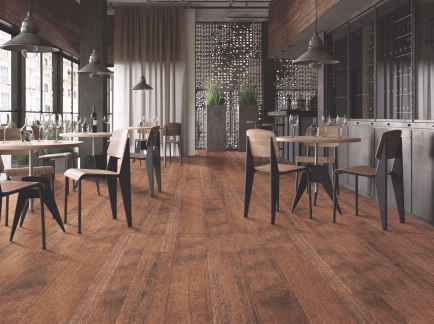
Sustainably manufactured in our Sikanderabad plant (UP, Noida) we have a selection of wooden planks that replicate the look and feel of natural wood.
Moreover, each one of us had different levels of anxiety about the pandemic. So, the smarter hotels are creating a lot more flexibility in spaces, be it grandeur for those seeking grandeur or open spaces for those seeking social distancing. This greater variety in spaces has cascaded to a larger variety demanded for tiles than earlier.
There is a higher preference for outdoor Patios, bars, and roof-top restaurants. So, we see an increased demand for pavers as well as elevation tiles. These create spaces with unique characters that leave guests inspired.
Patterned flooring continues to be chic. Bold colors (from our Décor range) can be used to highlight specific parts of the hotel making it the focal point for attention. Black & white colors or rich Moroccan blues and browns can add the splash of color making the space look warm and cozy.

Replicating the look of concrete, Cementum Gris is a vitrified tile with an industrial, urban aesthetic for both indoor and outdoor applications.
Q 2: Given that needs and requirements for flooring in hotel buildings vary from other buildings, what are a few key aspects taken into consideration for material selection?
Each property is a brand in its own right. You obviously choose flooring that fits with the brand character and the story you are trying to tell.
We see hotels attempting to reflect the local culture and ethos rather than having a cookie cutter approach in line with the corporate brand. The wide variety of flooring gives enough choice for finding the right tile design that will fit with the property’s narrative.
A few other aspects that one should consider while choosing floor tiles are durability, maintenance, scratch and slip resistance.
Tiles are great for high-traffic areas and they can withstand scrapes of chairs & tables. Laid in with the right technical supervision they have enormous strength and don’t break easily. They are also stain-resistant and easy to clean. Made of natural clay, they are also environment -friendly and don’t release any gases.
Wood-like tiles have much better acoustics and are softer on the eardrums than wood. They are eco-friendly, durable and very easy to maintain.

Produced using digital printing to create tactile 3D surfaces with glazes in relief Orienbell Tiles’ carvings captures the texture of raised veins and grooves in real marble.
Q 3: How has technology changed and improvised flooring products?
Over the years, technological growth has had a major impact on the flooring categories, leading to improvised design innovations. For instance, advanced digital printing has changed tile’s aesthetic capabilities. Advances in manufacturing have brought in new sizes, shapes, textures and thicknesses making tiles look indistinguishable from natural stone & marble.
You can get tiles of 800x1600mm or 1200 X 1800mm that look & feel like marble. We are also creating stories, so that tile designs blend into one another and 2-3 tile designs in lighter or darker shades or highlighters are available with patterns, colors that can be combined together. This makes transitions easier and minimises trip hazards.
If you are looking at creating movement in the lobby space, veins could be a strong option. You can also take some of these 600×1200 tiles on columns integrating them much better with the floor.

Cool Tiles (SRI >90) reflect heat, keep indoors cooler and reduce the heat load on air-conditioning.
You can create warm and comfortable cafes or rooms with wood-like flooring.
Even in a single room if you want to transition between living area, sleeping area and the bathroom there is a large variety of tiles to choose from. So you can have glossier marble in the living area, wooden tiles in the sleeping area and anti-skid matt finish tiles for the bathroom floor.
Of course, all this is possible at a substantially more affordable price-point. And it is also much easier to maintain.
With the versatility of indoor and outdoor usage, the enhanced technical characteristics create grip finish options and an unbeatable life expectancy. This, along with the wide range of designs on offer, has spiked growth in every sector including hospitality.
At Orientbell Tiles, we have introduced various digital tools to make the process of buying and selling more convenient for manufacturers and consumers. With the latest digital tools and technologies on the website, you can find tiles of your liking by just uploading a picture from Instagram or Pinterest (Samelook) Customers can also get a personalised 3D render of the chosen tiles in their project layout, along with recommendations from the company’s own in-house designers (Trulook); or even order samples directly from the website.
Q 4: What are some of the most opted flooring products in this industry?
The most popular flooring options in this industry continue to be ceramic & vitrified tiles. The reason for this is ease of maintenance and their resilience to stains.
We are also seeing a demand for unique products like Cool Tiles – that reflect heat (SRI >90), reducing indoor temperatures and contributing to saving energy.
These advantages in lifecycle costs make ceramic and vitrified tiles great choices. You tend to get tired of them before they wear out.