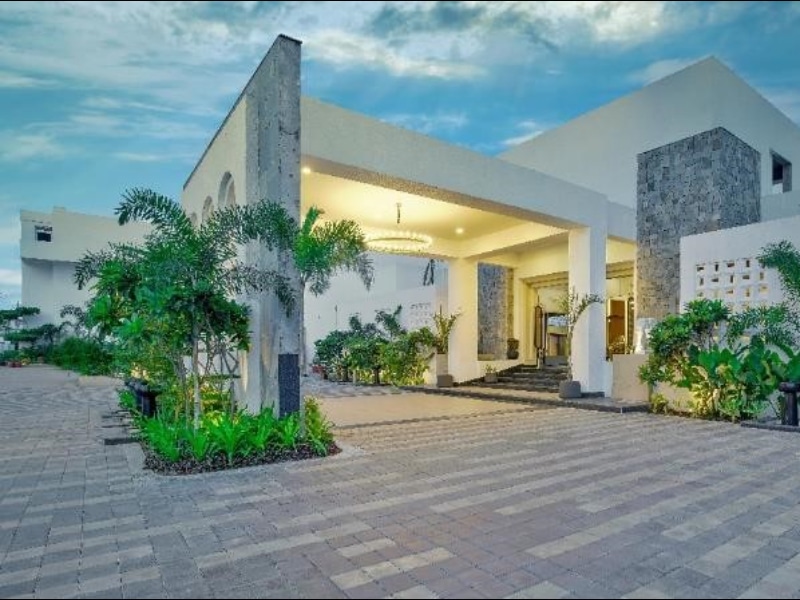
Effective design for the hospitality industry is driven by many considerations that are imperative for the comfort and satisfaction of the guests and associates. Of course, one has to cater to all of these requirements, and as a result, being considerate about sustainability and environment-friendly measures may seem difficult.
However, it is necessary to find the middle ground by using the right materials while crafting the appropriate design response for hospitality projects. Development in technology and research on sustainable alternatives helps make these choices a lot easier.
Each hospitality project has its unique set of technical and structural challenges. Along with these requirements, the primary design considerations for such projects are responding to the surrounding environment and views, creating a particular ambience or a setting, ensuring the user’s security and privacy, and providing them with a memorable experience on the premises.
Most of these requisites can be fulfilled by choosing the right fenestration systems in the design stage. Systems that fit the technical requirements and address the climate of the site are the right choice to go ahead with. In addition, these complement the design approach and can contribute to a lower carbon footprint.
The innovation in fenestration technology has embraced materials such as aluminum and glass that are at par with the technological developments while catering to the requirements of a wide range of projects. Improvements in their manufacturing and recycling processes have also made them sustainable alternatives in the construction industry. They also boast longer life cycles which reduces their maintenance and replacement costs.

The following advantages of aluminum make it an ideal choice for fenestration design in the hospitality sector:
SLIMMER PROFILES
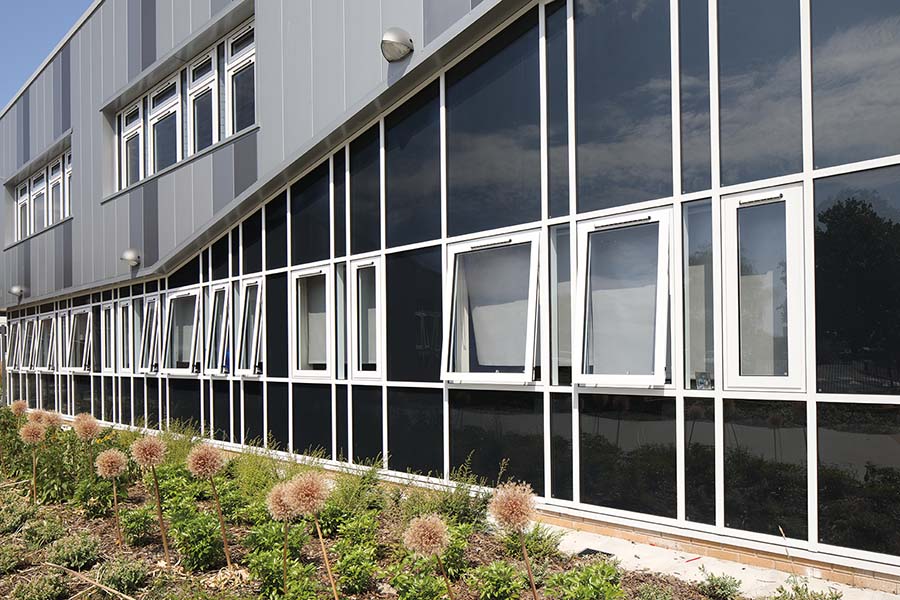
Being an easy material to work with, a wide range of extrusions and profiles are possible with aluminum. It allows for slimmer and more minimal profiles while providing structural stability to the fenestration system, owing to its inherent strength as a metal. Aluminum is also a flexible material to work with, in the sense that it can integrate both glass and other panels within its framework. One can use a variety of gaskets to enable this resulting in a versatile material.
A pivotal consideration for hospitality projects is to match the material palette’s appearance to create a cohesive ambience. Since aluminum is a non-corrosive material, one can experiment with a multitude of colors and finishes. It’s also a viable choice for blending the fenestration systems with the project’s theme, thus enhancing its aesthetic appeal.
ENABLING PICTURESQUE VIEWS
Due to the possibility of minimal and slim profiles, aluminum-based fenestration systems can enable longer panels spans while maintaining durability and strength. This is not always possible with most traditional fenestration materials, which usually have restrictions in terms of spans. Longer spans and wider panels can capture the picturesque views surrounding the site, which is an integral part of any hotel or resort experience.
Using aluminum with the right glass pairing can minimize architectural barriers for the given project. Doing so helps achieve the required shape and form of the exterior facades of the project while also rendering it a unique character.
INHERENT PROPERTIES OF ALUMINIUM
Aluminum is a robust material that is easy to work and innovate with. Owing to its non-corrosiveness, it guarantees longevity and gives excellent value for its worth. Moreover, it is completely recyclable and consumes less energy than steel during its manufacturing and recycling process. This further helps lower replacement costs of the fenestration systems.
Since it’s easier to install, clean, and maintain, it becomes a viable investment for hospitality spaces to save on the cost and manpower required. Apart from that, aluminum can also withstand harsh weather conditions without resulting in a lot of wear and tear – making it a good fit for tropical and cold climates alike. Furthermore, combining aluminum with energy-efficient glazing and a layout that optimizes natural light and ventilation can result in a sustainable fenestration system that works well with the site’s climatic conditions.
Incorporating suitable materials such as aluminum in fenestration systems, accompanied by proper design and maintenance strategies, can help in making more sustainable choices in the hospitality sector.