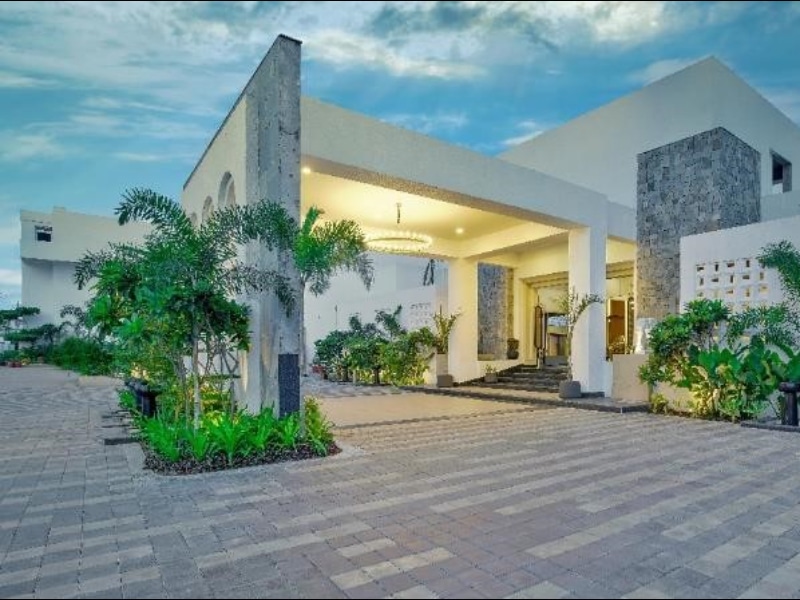


Hotelier India talks to some of the leading architects and interior designers who have worked on hospitality projects in India and abroad, on the challenges involved in creating hotels.
In the dynamic and burgeoning hotel industry in India, design is a crucial factor in making or breaking the image of a hotel.
While the visual appeal of the property plays a big role in branding a hotel, it is the attention to detail encompassing all the different aspects of the hotel that finally create an impression on the guest.
There’s been a global surge in tourism in 2010 and the domestic traveller has definitely made his presence felt.
With so many international and local brands coming on the scene, it is essential that hotels are able to differentiate themselves from the competition, whether they are luxury, mid-market or economy.
Design plays an important role in this scenario with the onus on architects and interior designers to be more creative and develop creations that are sustainable, efficient and aesthetically appealing.
Speaking about the Indian scenario Sanjay Sethi, Managing Director and CEO Berggruen Hotels says, “People are travelling a lot more now, especially on business. Therefore hotels need to be designed in line with global expectations.
In fact, we’ve used mostly local architects and interior designers, and while we have worked with 100% local architects, with our interior designers we’ve got a mix of local and international.”
Local talent v/s international expertise
When asked about the trend of brands hiring international architects and interior designers instead of using the local talent, Sethi adds, “The only reason that some hotels go for international designers is purely on account of their understanding of and exposure to the global scenario, a lot of these firms are large and have offices across western countries and across Asia.
What that does for them is it gives them a talent pool at a global level, and those ideas merge into building an internationally acceptable hotel.
That’s been the logic so far but what’s happening now over the last few years is that a lot of Indian architects have done similar things; they’ve done hotels abroad and have adapted that for hotels in India. Therefore you see them more in the Indian markets.”
Adding to that Architect Khozemat Chitalwala who heads Designers Group, a 23-year-old architecture and interior designing firm, says, “The perception of the client is that the Indian designers do not have exposure to international trends. But I feel it is changing slowly, thanks largely to the fact that the world is becoming a smaller place.”
On the other hand, architect Rahul Kadri of Kadri Consultants Pvt Ltd suggests there is as much amazing talent in India as there is abroad.
“Promoters are looking for that something extra and find an easy answer in using an exotic designer. Sometimes this leads to freshness in the approach. But essentially a good designer is a good designer and could be from anywhere and we have many in India,” he says.
Architect Sanjay Puri believes that the problem lies with developers who want a foreign name attached to their project, and who are just not as aware of Indian talent that is available locally.
“Indian developers also need help to open their minds to newer ideas, new vocabularies in architecture and interior design and this would help us as architects to create more innovative designs.
Indian hotels fail to create a new sense of space and design direction in general due to restricted thinking in terms of design by most Indian hoteliers.
We spend more time in convincing them to allow us to innovate than in the actual design process.” Puri recently completed a very interesting 27 room boutique hotel in Hyderabad on a rocky site retaining the existing boulders and planning the hotel around them.
In contrast to this perspective Architect Dean D’Cruz shares his views, “I think generally there is a lack of professionalism locally that we’ve seen compared to the specialty architectural practices that we see abroad.
Their strength lies in being able to create a clear presentation of the design intent and their ability to hone in on clear details and specifications, all of which make the decision-making process easy for the client.
I do believe Indian architects need greater exposure, because while we have the creativity, we lack the diversity and world experience that architects abroad have.”
When it comes to working with foreign designers, Sanjay Sethi shares that he only picked the renowned Japanese designer Shigeru Ban to work on the Keys resort project in Goa because he wanted someone who would make the resort stand out from all the other mid-market properties in the area.
“Shigeru Ban has offices in Tokyo, New York and Paris, and is one of the shortlisted architects for the replacement 9/11 monument in New York on ground zero, he’s also very good with waterfront properties and well known for very unique architectural projects such as paper houses that withstand storms and earthquakes.
He gave us a unique look and feel which gives us a strategic advantage over other resorts in Goa. We learnt a lot from the process and his own brand name lends us a huge advantage, because he is such a famous architect that people will come to stay at our resort simply because it is a Shigeru property.”
The process of selection of a design firm needn’t be a complicated one. Sethi mentions that since the Keys hotels were being built very rapidly, they needed architects who were able to handle scale and which had offices across the country.
He also adds that since there’s so much of demand for malls and commercial projects, very few architects have taken the risk of getting into hotels, so hotel specialist architects would be very well received in the country.
Room for improvement
Another area of conjecture is the implementation of green practices in constructing hotels.
While the catch phrases ‘green’ and ‘sustainable’ are being tagged on to sundry properties, several architects and interior designers suggest that not all hotels implement these practices in the planning stages, and often conduct them superficially to join the bandwagon.
Says Dean D’Cruz, “It is unfortunate that whatever sustainability that is applied to most hotels is usually green wash, using rubber wood furniture, and CFL bulbs hardly impacts the hotel’s footprint.
Sustainability has to be incorporated right from the base design of the building and will also positively alter the guest experience.
Usually hotels shy away from putting ‘too much green’ as it may reduce the luxuries offered to the guests. If carefully thought through, this will never happen and in fact guests would appreciate the altered experience.”
Kadri agrees with this when he says, “Most groups are approaching green building as an afterthought and in a very superficial way.”
Besides the conundrum of green practices being implemented, there are also laws, which are often redundant yet still in practice, causing immense problems for architects.
Architect P G Patki shares, “Normally authorities give a lot of leeway to hotels in terms of FSI but there are laws such as the one on parking that deems a hotel should have 1 car for every 600 sq ft.
No one needs this but such laws exist. Another thing is that hotels are normally given excess FSI compared to the amount given to normal developments but if this FSI doesn’t come in with the supporting height, it doesn’t serve the purpose. These are all teething problems. By laws of cities haven’t woken up to the change in the way things are done now.”
Sethi adds that another hurdle is the need for single window clearance in the true sense of the word.
“Building norms are completely different in every state, which makes it very inconvenient for me because I have to adapt the designs to the rules, and that makes it very difficult and expensive for me. And finally the big challenges is the time that gets lost in all this running around for approvals, we lose time both pre-construction and post-construction.”
This turns out to be a common complaint amongst architects. D’Cruz shares that CRZ regulations seem to be an irritant for most beach hotels and the industry generally seems to respond poorly to the need to protect such areas.
“Usually in their effort to create a ‘comfortable’ guest experience, their architectural and landscape interventions in the zone clash with the natural characteristics of the area.
The heavy built forms and manicured gardens that abut the beach are now, in some cases, giving way to lighter structures constructed in temporary, natural materials.
Such an approach offers a unique beach experience to the guest, almost negates its carbon footprint on the area and allows for a complete change in design and experience every season. I do believe a soft approach needs to be pushed in areas in which there are environmental concerns.”
“In cities like Kolkata, a service floor free of FAR is not allowed as per the prevalent rules and this is an operational hazard since plumbing has to be taken above a false ceiling,” adds Puri.
Final word
With so much going against them, what do Indian architects have to offer that international designers don’t? One of the key areas is innovations.
D’Cruz discusses, “We have been involved in creating new prototypes like roomless spa hotels, hotels that are actually run by the local population, hotels completely off the grid, hotels that are built from scratch every year, these radical approaches are fun to work with and very attractive to today’s discerning guests who are constantly looking for new and exciting experiences.”
He recently completed Reni Pani, a 12 room jungle lodge in the Satpura Range and a 60 room extension to Taj Fisherman’s Cove in Mahabalipuram, besides working on a complete renovation of the Cicada Lodge for the Coffee Day group in Bandipur and another six-room lodge in Badra close by.
Plans are also on for a Forest Interpretation centre and lodge in Bandhavghar. Puri contests that this is not easily done.
“Every project can be interesting whether it is a boutique or a brand. However, some brands have very restrictive design parameters because they are obsessed with the idea that all their hotels have to look similar.”
Patki adds that he is happier working with brands because they are clear about what they want.
“Boutique hotels are personality driven or they are like trophy hotels. These properties sometimes become difficult to design because the owner is not clear about what they want. You can qualify anything as a boutique hotel these days. It can be high end or simple.”