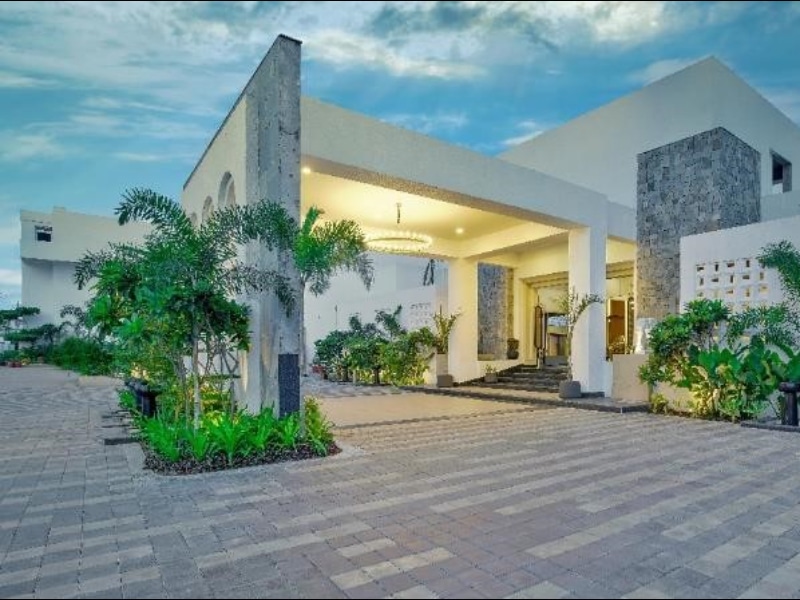
With more than 100 projects under its belt and having worked in over 160 countries and territories across six continents, WATG has a design presence probably second to none. Many of WATG’s projects have become international landmarks, renowned not only for their design and sense of place but also for their bottom-line success and sustainable ethos. Stephen Albert, vice president WATG, shares his commitment to being sustainable, creating eco-friendly designs and educating his clients towards embracing these solutions. Having worked on many hospitality projects in India, Albert feels that, “There is awareness about sustainability and environmental concerns. I ask almost every client/owner that I meet, on how strong are his feelings on sustainability and they all claim that it is very strong and they embrace it, but somewhere it stops at getting a certification,”
Sustainability is a very serious matter at WTAG and goes beyond just embellishing, as there are many aspects that the firm looks deeply into. “It all boils down to how far does the owner want to go and if he really wants to do it then they would hire not just a sustainable architect who is passionate but also a consultant who would lead them to the LEEDs accreditation,” explains Albert. Globally the awareness is much more and steps are being taken to reduce the carbon footprint, in India it is still fairly a new phenomenon. It could almost be called a fad as not all owners and developers understand the importance of what they are committing to or that it is the need-of-the-hour, something that everyone needs to contribute to. Albert shares his Indian experience.
“I think in India, people are aware but don’t know enough and there certainly is more that they need to learn. They are still to realise that if they embrace sustainability, they would have much larger savings than what they imagine. Many aspects of sustainability are related to making savings, and if done well, it will bring value to the property. It may not make money in the short term, but if you invest in certain systems, in the long term their running costs are less and make better return on investment. And some of these solutions are fairly simple,” he reveals. Having worked on projects like Taj Falaknuma and The Leela Bangalore and Goa, Albert feels that there is much to learn from the historical architecture of India. He specially mentions The Leela Bangalore, which according to him is an interesting project “since it is designed like an Indian palace and there are some great learnings and design ideas one can get from vernacular architecture”. The open verandah, which has been converted into an open lobby allowing breeze to passes through; an extensive garden area, where the greenery naturally cools the air before it moves into the lobby so that one doesn’t need air-conditioning; etc. are some of the ethnic ideas WATG adopted into the architecture here. “A lot of owners think that if we do not wash the towel every day we have done our bit, but that is not enough. It is not important to get a LEED certification, the real thing is what they do to actually conserve resources, make a better building, and guests enjoy knowing about that and feel better about staying in an environmentally-responsible hotel,” Albert shares.
While in Europe, there are recycling bins everywhere which are used judiciously, however, in India, it is not a part of the culture. “I find people throwing things on the road and many times instinctively bend to pick up some trash so casually dumped by the guy walking in front of me. There needs to be a wider education and awareness where everybody realises the cost to the environment. There is a long way to go,” he feels as there is a gap between being aware and actually practicing sustainability. “I had a client who took me to Egypt and we went to look at a site along the river Nile that gets flooded. So there was this amazing landscape and I was really taken in by the natural beauty of the place and the owner was very keen to do a green resort there that would be fully sustainable. I thought it was fantastic and loved the idea. And then, he finished his cola and threw the can into the water! These are the challenges that we face,” he smiles.
While WATG has been designing in India for a considerable time now, Albert doesn’t claim to understand the Indian ethos and mind set, “But I can safely say that I have a better grasp of it now than what I had when we first started,” he admits.
We present two case studies by WATG that were a part of Stephen Albert’s presentation at Hotel Build 2013.
Committed to sustainability
(NULL)

SHARE