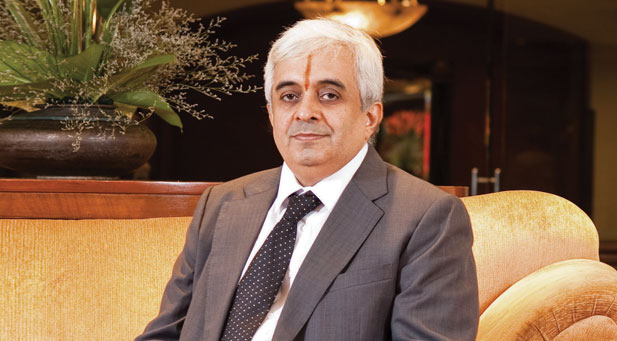
Rattan Keswani
When not at work, Rattan Keswani loves to play lawn tennis, read fiction and watch movies.


Pre-2012, Lemon Tree Hotels lacked an asset-light model. Processes for contracting, negotiation, technical assistance, marketing, distribution, HR and legalities had to be set up from scratch, adapting best industry practices. These had to be adapted to a mid/mid-upscale proposition with specific differentiators.
Carnation Hotels was set up in 2012 as a joint venture with Lemon Tree Hotels to give the brand this competitive edge. After a slow start, the group now has 13 operational hotels (1100+ keys) with 16 properties (~1300 keys) under development.
In April, Carnation Hotels launched Sandal Suites, foraying into the upscale serviced suites space. “Another project is under development in Manesar and we are in an advance stage of contracting two more. This is a new segment and we are buoyant about success in this area,” said Rattan Keswani.
Speaking whether management or ownership is a faster route for growth, he explained, that conceptually, management could be scaled up faster with lesser risk and commitment of capital. However, brand sanctity and standards have to be paramount for selection of existing hotel conversion and new developments.
“A lot of projects get refused if we find that standards cannot be applied in existing/operating hotels. While it is easier in a new build, time to market in such cases would then be the same as an owned hotel. For us it is not just about raising a new flag, we must be able to give coverage and our best results to an owner,” Keswani added.
With its robust employee practices, the group was ranked 4th in India by Great Places To Work. Looking ahead, it hopes to add another 1000 to 1500 keys in the next 24 to 30 months.
By Vinita Bhatia