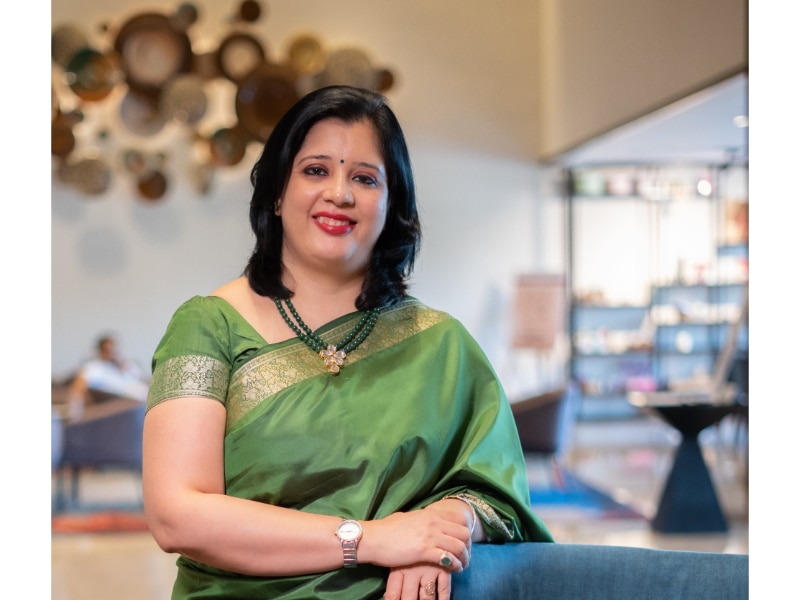
The organised hospitality industry operates in a highly regulated fashion. So, dining out or staying in a hotel is absolutely safe during a pandemic. After all, hoteliers have always put guest safety and health as a priority.” This is the sentiment echoed by most hoteliers, many of whom saw their businesses get crippled during a series of lockdowns since March 2020.
As hotels suspended operations, occupancy levels declined rapidly, and revenue per available room (RevPAR) became almost negligible. This in turn led to mounting losses. Ratings agency, ICRA, claimed that this is the biggest crisis the sector has ever faced.
Unlock 6.0 came as a ray of hope for the industry as the government allowed hotels and restaurants to resume activities. With domestic travel restrictions gradually easing, people, too, started venturing out for short trips – be it for work, staycations or tourism. This move prompted more hotels to reopen and they quickly madec‘safety’ their basic mantra to survive and succeed during the ongoing pandemic. Hoteliers innovated and implemented enhanced protocols to help guests, as well as their colleagues, to feel comfortable and safe and hopefully, keep them coming back for more.
To cover up its operating expenditure, Roseate Hotels & Resorts offers lifestyle experiences including a rooftop dining at Roseate House, private lakeside dining at The Roseate or a private movie theatre experience at Upstage cinema.
Hyatt India, for instance, collaborated with medical experts and other industry advisors to fine-tune reopening and operating procedures across all its properties. These measures included colleague reorientations and enhanced cleaning and safety protocols, among others. Every Hyatt property currently has a ‘Hygiene and Wellbeing Leader’, who is responsible for the hotel adhering to new operational protocols on sanitation, cleanliness training, food safety, etc.
StayWell Holdings announced its post COVID-19 brand standards that was developed in conjunction with Bureau Veritas, a testing, inspection and certification agency. These outline auditable measures that span front office, guestrooms and housekeeping, public areas and back of house including suppliers, restaurants and food outlets, functions and events as well as human resources. “These standards translate into the ‘Stay Well’ measure for the group’s hotels. Designed to not only provide the safest possible environment for guests as they return to travel, it also assures them, through independent implementation audits, that StayWell has adopted the highly stringent standard and operational protocols required to achieve the certification,” said Rohit Vig, VP, Development, StayWell Holdings and MD, StayWell Hospitality South Asia.
Accor India, too, collaborated with Bureau Veritas to implement ALLSAFE, its internal cleanliness and
prevention protocol. All Accor hotels have an ALLSAFE Officer to ensure that these guidelines are strictly followed, and the staff is trained under the programme to function in the ‘New Now’ of hospitality.
“From getting Accor’s ALLSAFE certification for guest assurance to digitisation of processes, our hotels, like Novotel and ibis Bengaluru Outer Ring Road, are going the extra mile to guarantee that guests are in safe hands. Adapting to the current situation, with availability of digital tools, the hotel arranges virtual tours and conferences for the ease of guests, which has cut down on physical meetings. Contactless processes are gaining popularity and have taken care of check-in, checkout, payments, dining and more,” said Kerrie Hannaford, VP, Commercial, Accor India & South Asia.
Back to Business
As part of its Daiwikare COVID-19 protocol, Daiwik Hotels airs out and cleans rooms 24 hours after guests check out, encourages room service to avoid crowding in the restaurant and limits excessive guest interactions with staff.
As hoteliers reopened after months of lockdown, many found that there was no clear road map for the uphill journey ahead. Business recovery hopes are largely pinned on the much-anticipated COVID-19 vaccine, which in turn would encourage people to travel and step out frequently.
However, this anticipation can’t unseat the haunting spectre of the virus, and neither can hoteliers afford to let their guards down when it comes to a guest’s wellbeing. At the same time, they have to keep an eye on the budget as new cleaning equipment, processes and protocols translate into additional costs. For instance, high-touch public surfaces like doors, handles, railings, furniture, restrooms as well as areas in guest looks like curtains, light switches, remote controls, etc., need added attention by the housekeeping staff. Similarly, the procurement team now have to spray goods received in the docks with sanitiser constantly. In addition to the cleaning utilities used, this process will increase the average man-hours per
process, escalating overall operational costs.
Sudeep Jain, MD, South West Asia at InterContinental Hotels Group (IHG) conceded that that the introduction of several measures to strengthen the hotel chain’s cleanliness standards, has understandably
added to the operational cost. However, the hotel chain benefits from its global scale and capitalises on its partnerships and connections across our portfolio to mitigate this cost. “During this time, globally, we have also relaxed our brand standards to help owners’ lower the operating costs. Having more flexible brand standards allows them to save money by, for instance, closing buffets, reducing airport shuttle services and deferring non-essential technology upgrades,” he stated.
According to Arif Patel, Regional VP, Sales & Marketing of Hyatt India, hoteliers are living in a new reality where these SOPs are essential for smooth functioning. The company’s primary focus is to make its properties safe havens for guests and colleagues, which cannot be compromised. “These expenses get adjusted in the PNA (Pre-Negotiation Agreement). Moreover, our purpose has always been about providing comfort and luxury to our guests in a secure environment,” he added.
Nicholas Dumbell, General Manager of The St. Regis Mumbai however pointed out that in reality not many expenses have gone up. Yes, cleaning a guest bedroom is taking at least twice as long as it used to because of some of the new requirements in contemporary times.
“But in general the actual cost has been benefited by some things that we have been able to reduce or remove. We had a huge amount of collateral throughout the hotel in pre-COVID times, which we removed or reduced with QR codes, which are considerable cheaper. So yes, there is additional cost but it is not a substantial amount that needs to be a major concern,” he pointed out.
Banking on Tech
As they resumed business, hoteliers realised the need to walk the tightrope of diminishing cash flows, safety protocols and reduced staff headcount. This is where they chose to embrace technology to optimise their operational efficiency and boost staff productivity in the newly altered scenario.
Sensor-based or foot operated hand sanitizers across public spaces have, ergo, become de facto standards, as have contactless check-in and check-out processes. Ajay Bakaya, MD, Sarovar Hotels And Resorts explained why.
“Moving to contactless tech and services brings in customer reassurance at every step. Contactless payments, pre-stay communication and verification, keyless entry, smart sensor-operated technology, and limiting contact between guests and staff are few of the many examples that are a testament to the rise of
contactless technology in the industry,” he stated.
Similarly, Roseate Hotels & Resorts introduced ‘Care by Roseate’ program with an app that can be installed on any mobile device. Using this, guests can peruse menus and pay directly post their meal.
Kush Kapoor, CEO, Roseate Hotels & Resorts added, “The feature also enables a ‘live kitchen access’ option where guests can view the food prepared by our chefs at any point of time during the day. This is to assure them of the hygiene protocols followed at our hotels. Guests wanting to order home delivery can directly order our take-out menus from our website.”
Tech is not being leveraged only at customer-facing touch points; it has found significant use at the backend too. Accor has developedan extensive procedure for all operational staff internally on iAuditor, a self-assessment platform, which enlists the brands standards and per touch point. “iAuditor assists hotels teams and management to focus on enhancing hygiene and cleanliness, temperature checks at the entrance, thereby safeguarding the well-being of guests and employees alike,” Kerrie stated.
IHG is also working with its scientific advisors on implementing the latest cleaning technologies for its properties. “We have our cloud-based IHG Concerto platform, which allows us to rapidly deploy new technology and training across our entire global estate,” stated Sudeep.
Hotels as smart destinations
The setting in of pandemic fatigue, easing of travel restrictions and reopening of the economy could signal a rebound for the hospitality segment. And hoteliers are rolling out a mega-sized red carpet for guests.
Most are concentrating on guests looking for quick getaways to closer destinations. This is because inbound business has totally stopped due to restrictions on air travel. Similarly, curbs on corporate travel has compelled them to focus more on the domestic leisure traveller.
The St. Regis Mumbai, for instance, is strengthening its collaboration with the upscale Palladium Mall in its neighbourhood and offering shoppers an opportunity to stay with the hotel as they spend. It launched a staycation package that focuses on experiencing popular St. Regis rituals, including Afternoon Tea, Champagne Sabering, Bombay Mary (a Mumbai twist to the Bloody Mary) and Butler service.
“One of the challenges for the industry to attract these customers is the rate that the market has gone down to. But at the end of the day, every business needs to make revenue, and if we have to lower our rates to secure business, this is essential,” he frankly stated.
Rather than leveraging technology with the mindset of where revenue used to be, Best Western believes that hotel brands should leverage technology for where the growth and opportunity are today in a COVID-19 reality.
Keen to welcome guests to their Indian and global properties as soon as possible, Staywell is providing them with options of flexible booking. “We are targeting short haul, drivable guests and are running a series of staycation offers to encourage them to explore their own local experiences. We are working with OTA partners on various offers to drive business, whilst maintaining proper rate parity,” Rohit added.
It is important to make noise to catch guest attention about these initiatives that hoteliers are taking. And Accor has realised it. It has launched multiple campaigns, like ‘For the Love of Travel, For the Love Now’ and ‘Let Us Take Care of You’, providing discounts and promoting weekend travels, staycations and drive-cations. Its ‘Missed Celebrations’ offer extends deals at restaurants across the region.
“We have come up with services like ‘Work From Hotel’, providing a safe, alternative working space to
individuals and organizations looking to work remotely in a healthy and reliable environment. Also, for guests unwilling to step out yet, almost all our hotels’ F&B outlets are providing delivery or takeaway services,” stated Kerrie.
She added that Accor initiated the ‘Welcome Back Program’ where it partnered with airlines to reignite confidence amongst travellers and showcase the safety measures adopted by its hotels. It is currently aligned with IndiGo’s 6E Rewards Program as the preferred hospitality brand, and this partnership offers Accor and the airline’s guests an opportunity to earn rewards while flying and staying across its properties. “Also, keeping in mind the wedding segment, IndiGo has introduced a wedding charter service in collaboration with Accor,” Kerrie informed.
To inspire people to escape their homes as restrictions ease, IHG is introducing attractive rates and promotions to specific markets as guests rediscover travel. It, too, is focusing on driving domestic, primarily leisure stay, guests.
In Q2 this year, it launched a ‘Getaways’ campaign that offered 35%-50% off a stay with complimentary daily breakfast at participating IHG hotels across India. Guests could book this offer before 30th September 2020 and can avail it until 31st March, 2021.
Sudeep said, “We also extended the IHG Rewards Club members status to January 2022, reduced Elite qualification requirement by 25%, and paused points expiry until the end of the year for Club members. To ensure that members get more value from their loyalty, we are rolling out dynamic pricing for Reward Nights globally, which means members can stretch their points further by using less points to book stays outside of peak times.”
Arif pointed out Hyatt’s hotels have introduced various staycation offers for guests to re-experience their world from a new perspective. “People can enjoy pristine spaces, imaginative cuisine and personalised service designed, while being rest assured by Hyatt’s commitment to care and safety. We also reimagined
our spaces to provide comfortable and safe environs where guests can relax or work and introduced a new work-space concept across several properties,” he added.
In addition to short-stay guests, many hoteliers like Best Western are also focusing on pilgrims, who have resumed their religious trips after a long hiatus. Vijay explained, “We have come up with staycation and pilgrim packages as well as last minute deals on OTA platforms.”
Daiwik Hotels has launched longstay packages like ‘Book for 3 nights, stay for the 4th night free’ and ‘Book for 5 nights, stay for the 6th and 7th night free’. Elaborating about these campaigns, Debashis Ghosal, MD, Daiwik Hotels said, “Presently our guests are primarily temple visitors who prefer spending three to five nights just to take a break away from their homes. Although we have had some long distance travellers, guests are mainly driving in their cars from places within 200-300 kms.”
Hoteliers are harnessing the power of the digital medium to connect with guests and inform them about their promotional campaigns to encourage them to visit their properties. Ajay said, “Our marketing machinery has created several offers for potential guests and travellers such as #carcations #Happy weekends offers #Happy Weddings @Sarovar #Mobile offers, etc. Initiatives on promoting wedding venues, customers looking for weekend getaways, and flat discounts worked very well for us because of
the current demand in the market and our exclusive offerings.”
Food Delivers Profit
Hotels are quickly adapting and pivoting their F&B business to meet the current needs of guests. Here’s a look at how some brands are boosting their F&B revenue.
IHG: In addition to facilitating social distancing at its F&B outlets, IHG has enabled technology, like e-menus or QR code menus, to minimise physical contact. At many of its hotels, instead of the usual buffets, breakfast is delivered through set menus via in-room dining. It has also created tailored menu options for target markets.
IHG has introduced home delivery service at many of its restaurants by partnering with food delivery aggregators. It has also provided Dial-A-Chef services to families wanting to create a fine dining experience at home.
Hyatt India: During the lockdown, Hyatt’s hotels delivered few signature dishes from its restaurants to guests ordering food at home. It is now encouraging members of the Hyatt Dining Club to visit its properties. Its hotels including Hyatt Place Hyderabad Banjara Hills are experimenting with F&B offerings like including curated, individual buffet-style meals, proportioned for each dining table. Hyatt Pune converted two of its garden suites, which include rooms that open to private gardens, into premium
dining facilities. It also converted its poolside lawn into an outdoor restaurant, and the executive lounge into a Deli snacks bar with tables placed as per social distancing guidelines.
Roseate Hotels & Resorts: The hotel chain started live kitchen access where diners can watch their food being prepared in the kitchen through their mobile devices. In addition to the regular food delivery menus, it is introducing a DIY menu where guests can replicate their favourite dishes at home.
Roseate House also introduced its own branded bottled water. It came up with concepts like ‘Mithai by Roseate’ gourmet boxes to celebrate special occasions at home and is also opening ‘Roasted by Roseate’ café in Delhi along with Upstage Club, a luxury co-working space.
Choice Hotels: With the pandemic bringing a slow-down for dine-in at-least in the foreseeable future, Choice Hotels entered and strengthened its food delivery channel. While it is now set to offer gourmet experiences to guests at its hotels, it will continue to augment its delivery and drive-thru pickup services. It will also focus on Cook-at-Home meal kits, catering packed meals to corporate institutions, which are areas that have seen a major spurt.
Best Western Hotels & Resorts: The hotel chain started promotions like Buy One, Get One Free to increase footfalls in its restaurants. Combos are also promoted on its digital platforms to ensure the hotels have more takeaways. It, furthermore, gives discount vouchers to consumers who order online to increase footfall at its F&B outlets.
Keeping Costs in Check
Adhering to COVID-19 safety guidelines will increase operational costs. This includes procuring sanitiser dispensers, fumigation machines, sanitizers, masks, thermal scanner, gloves, pulse oximeter and PPE kits, as well as constant cleaning of public areas and guest rooms. Restrooms, lifts and seating places require extra cleaning material, while regular COVID-19 tests for staff adds to the overall administration cost. Hoteliers can budget these expenditure in the current year’s operational expense and prepare to forecast them for the next financial year too.
Here are some recommendations to keep these expenses in control:
• Plan on soft-opening of hotels with one or two floors with essential facilities and staff. This could include housekeeping, select kitchen personnel as well as serving, engineering, front desk and security staff.
• Recruit experienced and multi-skilled employees for now.
• Choose TDH instead of a full a la carte menu to save on high food costs.
• Open discussions with suppliers for discounts of products, and landlords for rent.
– Vijay Bajpai, VP-Operations, Best Western Hotels & Resorts, India, Bangladesh and Sri Lanka
Priortising Staff Safety
While guest safety is paramount for hoteliers, employee wellbeing has emerged as a top priority as well. However, achieving this was a little challenging during the lockdown and now during Unlock 6.0. Since March, most of Daiwik Hotels’ employees were accommodated within the properties to ensure their safety. Debashis said, “They have been following the COVID-19 protocols of wearing masks, washing hands and maintaining social distancing for several months now.
Staff temperatures are checked and they are given Zinc and Vitamin C tablets on a daily basis to improve
their immunity. Moreover, continuous training and motivation programs are being conducted to uplift employee morale.” These proactive steps helped the brand sail through the tough months of lockdown propelled by employee satisfaction.
Vijay pointed out, “If you are focused solely on guest confidence, and are not applying the same logic to your employees, you are going to fail. But if you make your employees a priority and give them safety and security, then that feeling will automatically transfer over to your guests.” He added that if an employee feels uncomfortable working, it’s important to be flexible and let them stay at home. This will make employees feel more secure and confident, which will reflects in their deliverables and ability to deliver the best guest experience.
It is equally important to empower the associates and break the chains of hierarchy. “A guest who booked SureStay Plus Hotel by Best Western Indore in April 2020 asked for refund. The Front Office Manager (FMO) was fully empowered to take decisions for speedier customer resolution. The FOM not only offered a full refund but gave the guest an option for an extended stay date, valid till December 2021. With this immediate response to his complaint, the guest opted and picked up another date for this stay instead of the refund,” Vijay elucidated.
Empowering employees always looks good in theory, but can sometimes throw up tricky situations. After all, the guest is considered to be God and can an associate question divinity? Nicholas empathised with this, noting that few SOPs may prevent or create hurdles for some guest preferences. This is where it becomes pertinent to equip teams with the training and tools to explain to guests what is, and isn’t, safe or permitted.
“For example, there are guests who do not want to download the Arogya Setu app on their mobile. But once we explain that it is for their safety and that of others, they understand. We also need to make sure that guests are regularly reminded about wearing their masks and there is a-no tolerance policy while implementing that, in the nicest possible way. Most people adhere to it; it’s just that they aren’t used to it,” he opined.
Another challenge that hoteliers are dealing with is working with limited workforce. This has made it even more imperative for them to train employees on-site about the government issued safety and hygiene guidelines, as well as ways to manage normal day-to-day duties as per new protocols.
Choice Hotels has seen a major spurt in ‘Cook-at-home’ meal kits and catering packed meals to corporate companies.
Considering safe distancing measures, Choice Hotels started using a blended learning approach comprising offline sessions with special seating arrangements and digital learning sessions at scheduled
intervals. Vilas Pawar, CEO, Choice Hotels said, “There are many new SOP-based training sessions, which are mandatory for colleagues to complete before resuming hotel operations in the new normal. We have hired certified departmental trainers with the guidance of a Learning and Development Manager. They are consistently sharpening our colleagues’ knowledge and skills in the new normal and helping them identify creative avenues of engagement.”
Some global chains came up with an integrated practice to empower their workforce. Hyatt’s Global Care and Cleanliness Commitment, which was introduced in April 2020, builds on the company’s existing with an accreditation process by the Global Biorisk Advisory Council for all its hotels. This covers several aspects such as colleague training, and formation of a cross-functional working group of medical experts and industry professionals.
Talking about it, Arif said, “Hyatt has reimagined the colleague journey to include new work procedures, colleague resources, and re-orientations, in an effort to ensure their safety and wellbeing. Daily colleague surveys have been introduced to measure colleague comfort and wellbeing, enabling hotel leaders to address opportunities, make adjustments as necessary and meet colleagues’ needs in real time. All this is being implemented to ensure seamless and hassle-free experience for our guests.”
Kerrie pointed out that there is no substitute for good training and open discussions, which helps hoteliers come up with creative solutions to day-to-day customer queries. As guests become more curious about procedures being followed at every touch point – be it procuring material to kitchen hygiene – it is essential that employees use standard transcripts to avoid deviation from established protocols.
“When ALLSAFE was implemented at Sofitel Mumbai BKC, it took the housekeeping team just a few weeks to streamline standards and implement some best practices, as most of it was already in place. The hotels enforced elevated precautionary operational procedures and will go even further with additional hygiene and safety measures and the most stringent cleaning standards,” she pointed out.
Similarly, Novotel Ahmedabad introduced a UV sanitisation tunnel as an extension of the baggage scanner. The front desk personnel always ensure adequate social distancing between guests and procure details of travel histories to evaluate possible symptoms. “At present the housekeeping and engineering departments have become key players ensuring stringent room checks, air quality checks and maximum levels of hygiene has been maintained throughout the hotel including the public areas especially the fitness centres, restaurants, elevators among others,” Kerrie added.
As its hotel teams receive ongoing briefings about enhanced operating protocols, Sarovar Hotels and Resorts has enforced a ‘Checklist Culture’ has in all departments to monitor sanitization and hygiene standards. “Practices include medical check-ups for all team members, thermal check-ups while entering
hotel premises, compulsory usage of sanitizers and practicing social distancing. Stringent checks and rigorous property round by the General Manager, FOM, Executive Housekeeper and Chief Engineer on daily basis ensures that safety, hygiene and sanitization standards are maintained at all times,” added Ajay.
IHG encourage its teams to be intuitive with guests and determine the level of engagement and brand experience they are seeking on an individual basis. Some may want to have limited- to no-contact and some may want to get the same level of engagement that they were used to before, with an added lens of the brand’s experience, explained Sudeep.
As the world transitions to a ‘new normal’, safety and hygiene have become mainstays for the hospitality
industry. To regain guest confidence, hoteliers are on an overdrive to showcase the safety measures taken by them. Vilas summed up it up best when he said that the business of hospitality is akin to treating guests like family and providing them with safe and comfortable spaces for a stay or meal. The only difference is that the focus has shifted from aesthetic cleanliness to clinical sanitation.
Nonetheless there is no taking away from the fact that the immediate future of guest service in Indian hospitality will be quite different. While the handshakes will be replaced by a Namaste and the tikkas on the forehead or flower garland forgotten for now, the warmth in the service is unlikely to change.